
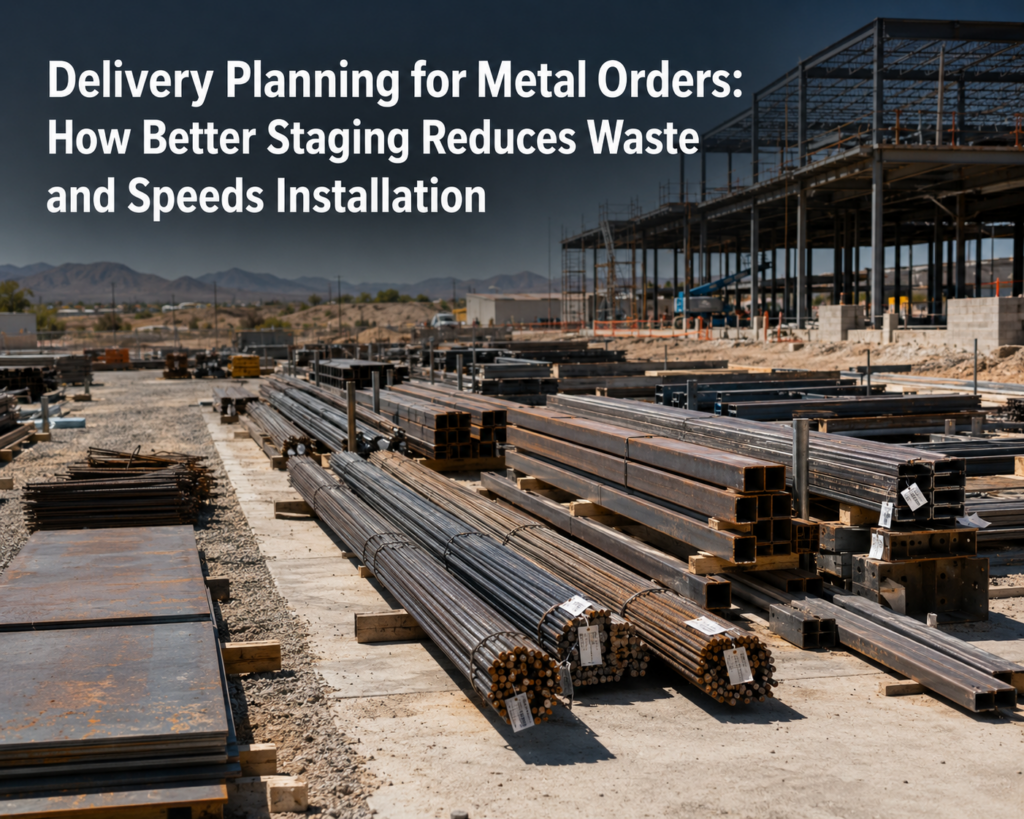
The steel arrived on time, correct, and complete. And the job still lost half a day. The truck dropped it wherever there was room, which turned out to be right where the crew needed to work. Now two tons of metal has to move before anyone can start.
A forklift that was supposed to be doing something else is doing that instead. This is the quiet failure that good material and a good supplier cannot prevent on their own. Metal delivery planning is the piece that connects a correct order to a productive crew. Where the steel lands, in what sequence, and how it is protected all decide whether the delivery accelerates the build or gets in its own way.
This guide covers 7 staging moves that cut waste and speed installation.
Why Staging Decides the Value of a Delivery
A delivery is not finished when the truck leaves. It is finished when the metal is in the hands of the crew installing it. Everything between those two points, the unloading, the storage, the moving, is cost with no value attached. The biggest hidden cost is double handling. When material lands in the wrong place, someone has to move it again.
That second move is pure waste in labor and equipment time. Good metal delivery planning aims to touch the steel as few times as possible. Every extra handling is time the crew is not building, and a chance for the material to get damaged. It also pays to inspect the load before it comes off the truck, so a problem never gets staged at all.
Key Takeaway: A delivery only pays off when the metal reaches the crew. Metal delivery planning aims to touch the steel as few times as possible and eliminate double handling.
1. Plan the Laydown Area Before the Order Ships
The laydown area is the holding zone between delivery and installation, and it needs to be decided before the truck is loaded, not when it arrives.
Size It Realistically
A common rule of thumb is to plan 10 to 15% of the total project footprint as laydown space. Heavy steel projects need more. Underestimate it and material spills into work zones. Metal delivery planning starts with an honest look at how much room the order actually needs, including the space to maneuver around it.
Key Takeaway: Plan roughly 10 to 15% of the project footprint as laydown space, more for heavy steel. Metal delivery planning fails when the material has nowhere to go.
2. Keep the Staging Area Off the Critical Path
This is the most common logistics failure on a jobsite, and it is entirely avoidable. Material gets staged exactly where the next trade needs to work. Now the steel has to move before anyone can start.
Look at What Happens Next
Before choosing a staging spot, look at the schedule and ask what work happens in that area next. Stage the metal where it will not block scaffold access, crane positioning, or the next pour. Good metal delivery planning thinks one step ahead in the schedule, not just about where there is room today.
Key Takeaway: Never stage metal where the next trade has to work. Material blocking the critical path is the most common and most costly metal delivery planning failure.
3. Sequence the Delivery to the Installation Order
Metal that arrives in installation sequence installs faster. Metal that arrives as one undifferentiated pile has to be sorted before it can be used.
Ask the Supplier to Load in Reverse
Tell the supplier your installation sequence and ask them to load the truck so the first pieces needed come off first. Bundles tagged and organized by phase or pour sequence let the crew grab what they need without unbundling and measuring. This kind of metal delivery planning turns a delivery into a kit rather than a heap. The time saved shows up on the first day of installation.
Key Takeaway: Sequence the load to the installation order and require tagged bundles. Metal delivery planning that matches the build sequence removes hours of sorting.
4. Use Just-in-Time Delivery Where It Fits
Material sitting on site is material at risk. It can be damaged, stolen, or simply in the way, and it ties up laydown space that other trades need.
Time It to the Crew, Not the Calendar
Just-in-time delivery means the metal shows up close to when the crew is ready to install it. That reduces congestion, cuts storage exposure, and protects the material from sitting in the sun and dust. The tradeoff is risk. A just-in-time delivery that slips leaves a crew idle. Sound metal delivery planning balances that risk by confirming the delivery date with the supplier and keeping a small buffer on critical items.
Key Takeaway: Just-in-time metal delivery planning cuts congestion and exposure. It needs a confirmed date and a buffer on critical items so a slip does not idle the crew.
5. Plan the Unloading, Not Just the Drop
A delivery is only as good as the unloading. If the forklift is busy, the access is blocked, or nobody is expecting the truck, the driver waits and the schedule slides.
Confirm Access and Equipment
Before the delivery, confirm the site access, the unloading equipment, and who will be there to receive it. Heavy steel needs the right machine and a clear path in and out. Communicate the delivery window to the whole site so nobody parks in the unloading zone. Metal delivery planning that ignores the unloading turns an on-time truck into a late one.
Key Takeaway: Confirm access, equipment, and a receiver before the truck arrives. Metal delivery planning that skips the unloading wastes the on-time delivery it worked for.
6. Protect the Metal Once It Lands
In the desert, staged metal takes sun, dust, and occasional monsoon rain. Material left on the ground picks up moisture and damage that turns into rework or a reorder.
Get It Off the Ground and Covered
Stack metal on dunnage or raised pallets so it drains and stays clear of ground moisture. Cover or tarp coated and finish-critical material to protect it from sun and dust. Damaged material means reorders, delays, and wasted money. Protection is a core part of metal delivery planning, not an afterthought once the steel is down.
Key Takeaway: Stack metal on dunnage and cover finish-critical material. Unprotected staged steel in the desert becomes the reorder that metal delivery planning was supposed to prevent.
7. Plan for Double Handling When You Cannot Avoid It
Some sites are simply too tight to stage the metal in its final position. On those jobs, the material lands in a temporary spot and moves later. Pretending otherwise does not make the second move disappear.
Budget the Second Move
If double handling is unavoidable, account for it in the schedule and the budget rather than absorbing it as a surprise. Plan the temporary location, the equipment, and the timing of the second move. Honest metal delivery planning treats double handling as a known cost. That beats discovering it as an unplanned afternoon of forklift work.
Key Takeaway: When a tight site forces double handling, budget the second move into the schedule. Metal delivery planning that ignores it pays for it anyway in lost hours.
The Pre-Delivery Checklist
Most staging failures trace back to a question nobody asked before the truck rolled. Run through this short list a few days ahead of any significant metal delivery, and most of them disappear.
Confirm the Basics
Where exactly will the metal land, and is that spot clear of the next trade’s work? What equipment will unload it, and is that equipment available on the delivery day? Who is on site to receive the load and check it in? Is the access route clear, and does the whole site know the delivery window?
Confirm the Details
Is the load sequenced to the installation order? Are the bundles tagged so the crew can identify them without unbundling? Is there dunnage and cover ready for anything finish-critical? And if the site is tight, is the second move planned and budgeted?
Communicate the Plan
The last step is telling everyone. The supplier needs the window and the access constraints. The crew needs to know when it lands and where it goes. Other trades need to know the unloading zone is spoken for that morning. Metal delivery planning falls apart when the plan lives in one person’s head, so put it where the whole site can see it.
Key Takeaway: Run a pre-delivery checklist a few days out covering location, equipment, receiver, sequence, and protection, because most metal delivery planning failures come from a question nobody asked.
Working With the Supplier on Delivery
The supplier is a partner in this, not just a truck. A good one will work with the staging plan rather than dropping the load and leaving. Share your site constraints, your installation sequence, and your delivery window when you place the order, not when the truck is at the gate. Ask about tagged bundles, phased or partial shipments, and load sequencing. A supplier with regional routes and real scheduling flexibility can time deliveries around your build rather than their convenience.
Ordering material cut to size also shrinks what has to be staged in the first place. Fabricated parts take less room and need no field processing. The suppliers who do this well treat delivery as part of the product. That is worth more than a small difference in price per pound.
Key Takeaway: Share the site constraints and installation sequence when you order. Metal delivery planning works best when the supplier schedules the delivery around your build.
Frequently Asked Questions
How much laydown space do I need for a metal delivery?
A common rule of thumb is 10 to 15% of the total project footprint, and heavy steel projects typically need more. Include room to maneuver equipment around the material, not just the footprint of the stacks themselves.
What is double handling and why does it cost so much?
Double handling is moving material more than once, usually because it landed in the wrong place. Every extra move is labor and equipment time with no value added, plus a fresh chance to damage the metal. Good staging aims to touch the steel as few times as possible.
Should I use just-in-time delivery for steel?
It depends on the site and the risk. Just-in-time reduces congestion and exposure, which suits tight sites and finish-critical material. The tradeoff is that a slipped delivery idles the crew, so confirm the date and keep a buffer on anything on the critical path.
How should metal be stored on site?
Stack it on dunnage or raised pallets so it drains and stays off the ground, and cover coated or finish-critical material against sun, dust, and rain. Organize it by installation sequence so the crew can find what they need without digging.
Conclusion
A perfect order badly staged is a wasted delivery. The metal can be the right grade, cut to spec, and on time. It can still cost the job hours if it lands in the wrong place, in the wrong order, unprotected, and with nobody ready to unload it. The seven moves are practical and cheap. Plan the laydown area realistically.
Keep staging off the critical path. Sequence the load to the installation order. Use just-in-time where it fits. Plan the unloading. Protect the metal once it lands. And budget the double handling you cannot avoid. Do that, and metal delivery planning stops being an afterthought. It becomes one of the quiet levers that keeps a project on schedule.
Plan Your Next Delivery With Endura Steel
Endura Steel delivers from three regional locations across California, Arizona, and Nevada, with tagged bundles, phased shipments, and routes built around your build. More than 55 years of desert experience stands behind every load. Tell us your site and your sequence, and get metal delivered the way your crew needs it.
- Call us: Hesperia, CA at (760) 244-5456, Thousand Palms, CA at (760) 343-3100, or Ft. Mohave, AZ at (928) 754-7000.
- Request a quote online: Use our contact form and include your delivery window, site access, and installation sequence.
- Email your account manager: Send your schedule and site constraints, and get a delivery plan that matches the build. Explore our metal products or learn how cut to size and fabrication shrinks what you have to stage. Your success is our success.
Key Takeaway: Whether you call, request a quote online, or email your schedule, good metal delivery planning gets the right steel to the right spot in the right order. Plan the staging before the truck rolls.
