
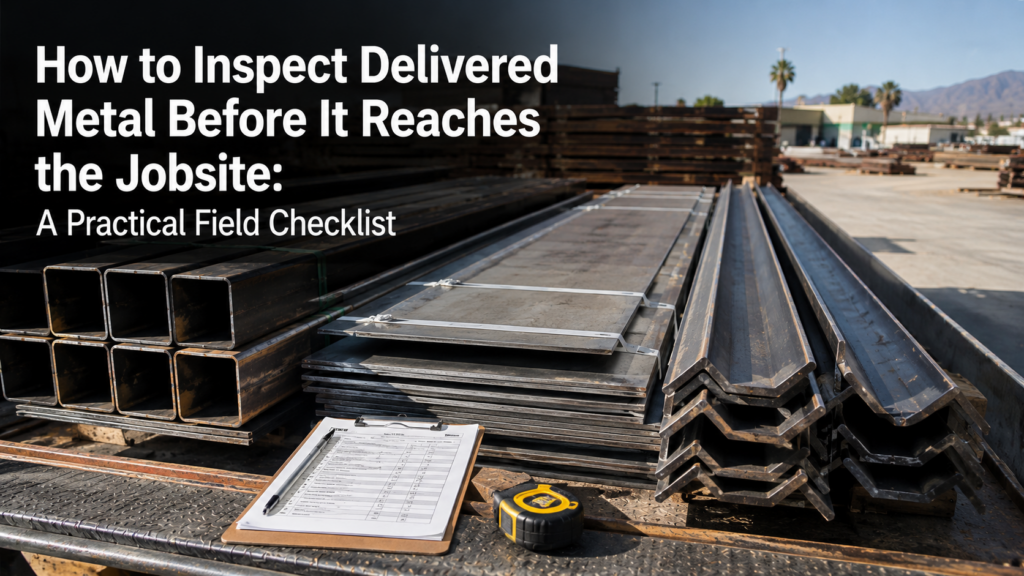
The moment a metal delivery lands is the last cheap chance to catch a problem. Once you sign for it, unload it, and start building, the risk shifts to you. A wrong grade or a damaged member becomes your problem to fix, often after it is already installed. A few minutes of inspection at the truck can save days of rework later. Yet metal delivery inspection is the step crews skip most, usually because the schedule is tight and the load looks fine at a glance.
This guide lays out a practical field checklist. It covers 8 checks to run before you sign, so the wrong or damaged material never makes it into the build. None of them takes long, and together they protect the schedule, the budget, and the finished structure. The best defense starts even earlier, with choosing a supplier who ships it right the first time.
Why the Receiving Check Matters
Inspecting metal at delivery is a non-negotiable quality step. Skip it, and undetected damage, a wrong grade, or a short count enters the job unnoticed and surfaces at the worst possible time. Catching it at the truck keeps the problem where it belongs, with the supplier or carrier, not with you. There is also a paperwork reason. Documentation problems are one of the most common causes of a rejected receipt, and once you sign, disputing a shortage or damage gets much harder. A disciplined metal delivery inspection protects your right to reject or return material before you have accepted it. That window closes fast, so use it.
Key Takeaway: Metal delivery inspection is the last cheap chance to catch a problem. Once you sign and unload, a wrong or damaged load becomes your cost to fix, not the supplier’s.
Before the Truck Arrives: Be Ready
A good metal delivery inspection starts before the truck shows up. Have the right paperwork and tools staged so the check is fast and thorough, not a scramble while the driver waits. Keep the purchase order, the packing list, and the approved drawings on hand. Have a tape measure or calipers for dimensional checks, and something to mark or tag any suspect material. A phone for photos is essential. A documented photo of damage at delivery is your evidence if a dispute follows. Prepared, the whole inspection takes minutes.
Key Takeaway: Stage the purchase order, packing list, drawings, a measure, and a camera before delivery. A prepared metal delivery inspection is fast while a scramble misses things.
1. Match the Paperwork to the Order
The first check is documentation. Before anything comes off the truck, confirm the packing list and delivery ticket match your purchase order. Grade, size, form, quantity, and finish should all line up with what you ordered.
Catch the Mismatch Early
A mismatch on paper is the easiest problem to catch and the cheapest to fix. If the ticket does not match the order, flag it before unloading. Signing a ticket that does not match your purchase order weakens your position later. Resolve the discrepancy with the driver and the supplier first. Paperwork that matches is the foundation of the whole metal delivery inspection.
Key Takeaway: Start metal delivery inspection by matching the delivery ticket to the purchase order, because a documentation mismatch is easiest to fix before you unload and sign.
2. Verify Grade and Mill Test Reports
Metal that looks right can still be the wrong grade. The mill test report, or MTR, certifies the metal’s grade and properties. It is how you confirm the material matches the spec.
Check the Heat Number
Every batch of steel has a heat number, and that number appears both on the MTR and marked on the material itself. Cross-reference the heat number on the physical metal against the MTR to confirm the grade is what the drawings call for. The specifications an MTR references, such as those from ASTM International, define the grade’s chemical and mechanical properties. Confirming that link during metal delivery inspection prevents a grade substitution from reaching the structure.
Key Takeaway: Cross-reference the heat number on the metal against the mill test report, because that traceability check is how metal delivery inspection confirms the grade is right.
3. Inspect for Transport Damage
Metal takes a beating in transit. Long members can bow from inadequate support, edges can corrode, and improper stacking can distort a piece. Damage from the road is common and easy to miss under a quick glance.
Know What to Look For
Check long, slender members for bowing or bending from poor transit support. Look at cut edges for corrosion bloom and at bolt holes for elongation from shifting loads. Scan surfaces for gouges, dents, and scrapes. Flag any damage that could affect fit or strength during metal delivery inspection. Photograph it and raise it before you accept the load.
Key Takeaway: Inspect for bowing, corrosion, and impact damage from the road, because transport damage is common and metal delivery inspection is the moment to catch it.
4. Spot-Check Critical Dimensions
Fabricated metal has to match the drawings, and delivery is the time to confirm it. You do not need to measure every piece, but spot-checking critical dimensions catches a fabrication error before it reaches assembly.
Measure What Matters
Pull the drawings and measure the dimensions that matter most: member lengths, connection geometry, and hole spacing on bolted parts. A part that is off by a fraction can throw off a whole connection. A quick measured check during metal delivery inspection is worth the minute it takes. Confirm the pieces match the fabrication drawings before they go into the build.
Key Takeaway: Spot-check critical lengths, connection geometry, and hole spacing against the drawings, because metal delivery inspection catches a fabrication error before assembly does.
5. Reconcile Quantities and Weight
A short count stalls a job as surely as a wrong grade. Count the pieces and bundles against the packing list, and where weight is the measure, compare the delivered weight against the shipping documents.
Count Before You Sign
It is tempting to trust the count and move on, but a shortage found after signing is far harder to resolve. Reconcile the quantity during metal delivery inspection, while the driver is still there and the load is still the supplier’s responsibility. A quick count now avoids a work stoppage later, when a missing bundle turns up at the wrong moment.
Key Takeaway: Count pieces and confirm weight against the documents during metal delivery inspection, because a shortage caught after signing is far harder to resolve.
6. Verify Coating and Finish
If the order called for galvanizing, powder coat, or another finish, delivery is the time to confirm it. A coating that is missing, wrong, or damaged in transit is a problem best caught before the metal goes up.
Check the Surface
Confirm the coating type matches the order, and scan the surface for damage that exposes bare metal. In the desert, a compromised finish is a corrosion problem waiting to start, and a repair is far easier before installation. Note any coating damage during metal delivery inspection so the supplier can address it. That beats discovering it after the structure is built.
Key Takeaway: Confirm the coating matches the order and check for transit damage. A compromised finish caught during metal delivery inspection is far cheaper to fix before installation.
7. Tag and Quarantine Suspect Material
When something fails a check, it has to be handled clearly so it does not get used by mistake. Suspect material left in the general stack invites a costly error when a busy crew grabs the wrong piece.
Mark It and Set It Aside
Tag any nonconforming material as “hold” or “quarantine” and set it apart from the accepted load. Clear marking prevents cross-mixing and makes the supplier discussion straightforward. This simple discipline is the difference between a caught problem and one that quietly enters the build. Make it part of every metal delivery inspection.
Key Takeaway: Tag and separate any suspect material during metal delivery inspection, because clearly quarantined metal cannot be grabbed and installed by mistake.
8. Document Everything and Report Discrepancies
The final check is the record. Photograph any damage, note any discrepancy, and report it to the supplier before you sign for anything you have not accepted. Documentation is what turns a problem into a resolved claim instead of an argument.
Create the Paper Trail
Take clear photos, write down what you found, and communicate it promptly. A documented discrepancy at delivery is easy to resolve, while an undocumented one weeks later is a dispute. Good records also build the traceability that structural and permitted jobs require. Thorough documentation closes the metal delivery inspection the right way.
Key Takeaway: Photograph and report every discrepancy before signing, because documentation turns a metal delivery inspection finding into a resolved claim rather than an argument.
The Field Checklist at a Glance
Run these eight checks as one quick pass while the driver is still there. Together they take only a few minutes and protect the entire job. Match the paperwork to the order. Verify grade against the mill test report. Inspect for transport damage. Spot-check critical dimensions. Reconcile quantities and weight. Verify coating and finish. Tag any suspect material. And document everything before you sign. A load that clears all eight is ready for the build. A load that fails any of them is a problem you caught at the one moment it was still cheap to fix.
Key Takeaway: Eight fast checks at the truck, from paperwork to documentation, are the whole metal delivery inspection. Running them before you sign is what keeps bad material out of the build.
Frequently Asked Questions
What is the most important thing to check on a metal delivery?
Start with the paperwork and the mill test report. Confirm the delivery ticket matches your purchase order, then cross-reference the heat number on the metal against the MTR to verify the grade. These catch the most costly errors, a wrong grade or wrong material, before anything comes off the truck.
What is a mill test report and why does it matter?
A mill test report, or MTR, is a document from the mill that certifies the metal’s chemical composition, mechanical properties, and grade, tied to a heat number. It proves the material matches the specification. On structural and permitted jobs, it is the traceability record an inspector will require.
Should I inspect every piece in a large delivery?
Not always. For large or recurring shipments, a representative spot-check of critical dimensions and a full count is usually practical, rather than measuring every piece. Focus close inspection on the pieces most critical to the structure, and always reconcile the total quantity.
What do I do if the metal is damaged or wrong?
Do not sign for it as accepted. Photograph the problem, tag and set the material aside, and report the discrepancy to the supplier immediately. Handling it at delivery, while the material is still the supplier’s responsibility, is far easier than after you have signed and unloaded.
Conclusion
The few minutes spent inspecting a metal delivery are some of the most valuable on the whole job. Match the paperwork. Verify the grade against the mill test report. Check for transport damage. Spot-check dimensions. Reconcile the count. Confirm the finish. Quarantine suspect material. And document it all. These eight checks catch the problems that are cheap to fix at the truck and expensive to fix in the structure. The principle is simple. The moment before you sign is the last time a wrong or damaged load is the supplier’s problem instead of yours. Use it. A disciplined metal delivery inspection is quiet, unglamorous work, and it is exactly the kind of discipline that keeps a project on schedule and on budget.
Order With Confidence From Endura Steel
Endura Steel supplies metal that arrives correct, documented, and ready to inspect. We serve contractors, fabricators, and builders across California, Arizona, and Nevada, backed by more than 55 years of experience. Order from a supplier that stands behind what it ships.
- Call us: Hesperia, CA at (760) 244-5456, Thousand Palms, CA at (760) 343-3100, or Ft. Mohave, AZ at (928) 754-7000.
- Request a quote online: Use our contact form and include your grade, dimensions, finish, and required date.
- Email your account manager: Send your specs, and get material with the documentation and quality your inspection will confirm. Explore our metal products or our cut to size and fabrication services. Your success is our success.
Key Takeaway: Whether you call, request a quote online, or email your specs, a good metal delivery inspection confirms what a good supplier already got right. Run the eight checks and order from a supplier that stands behind the load.
